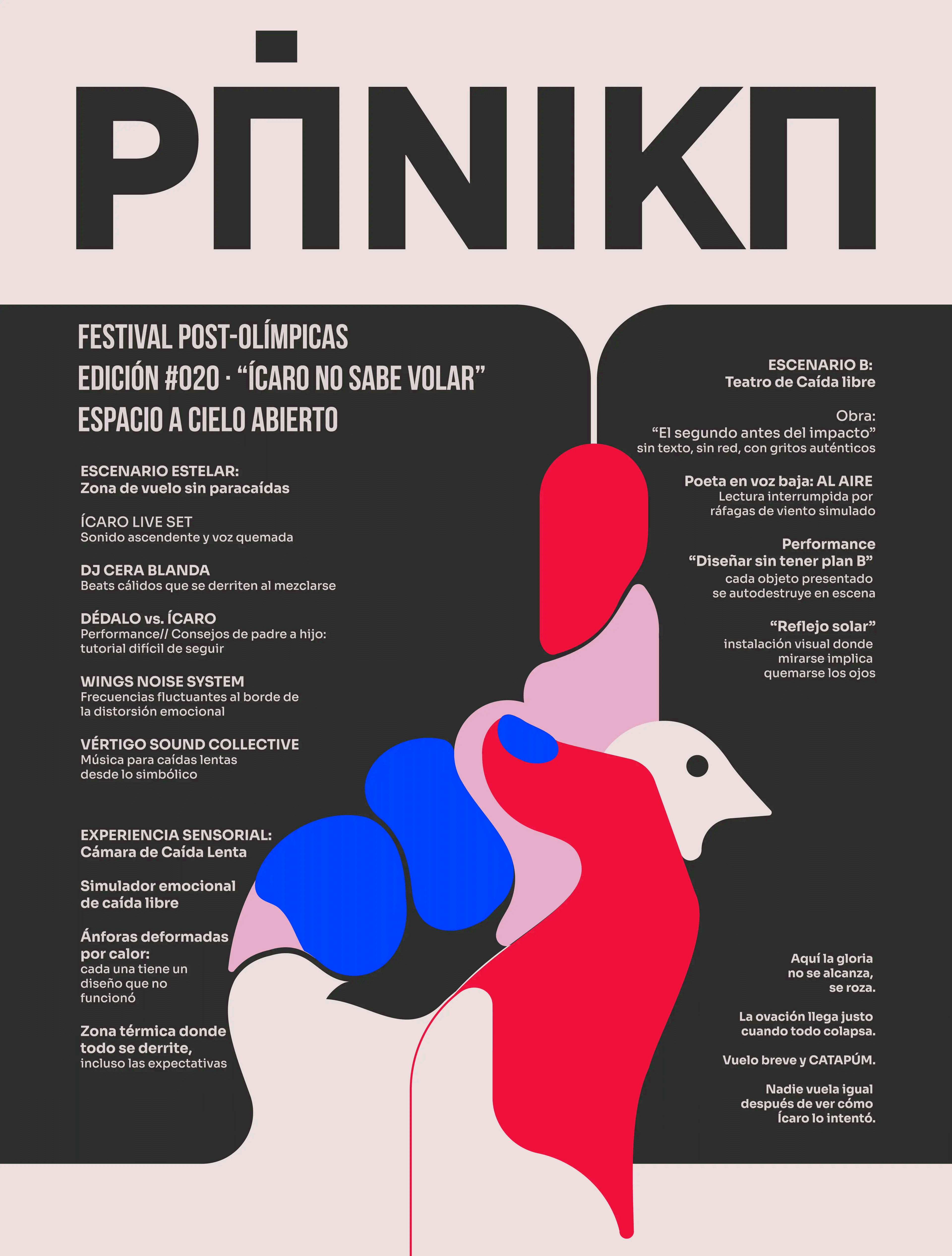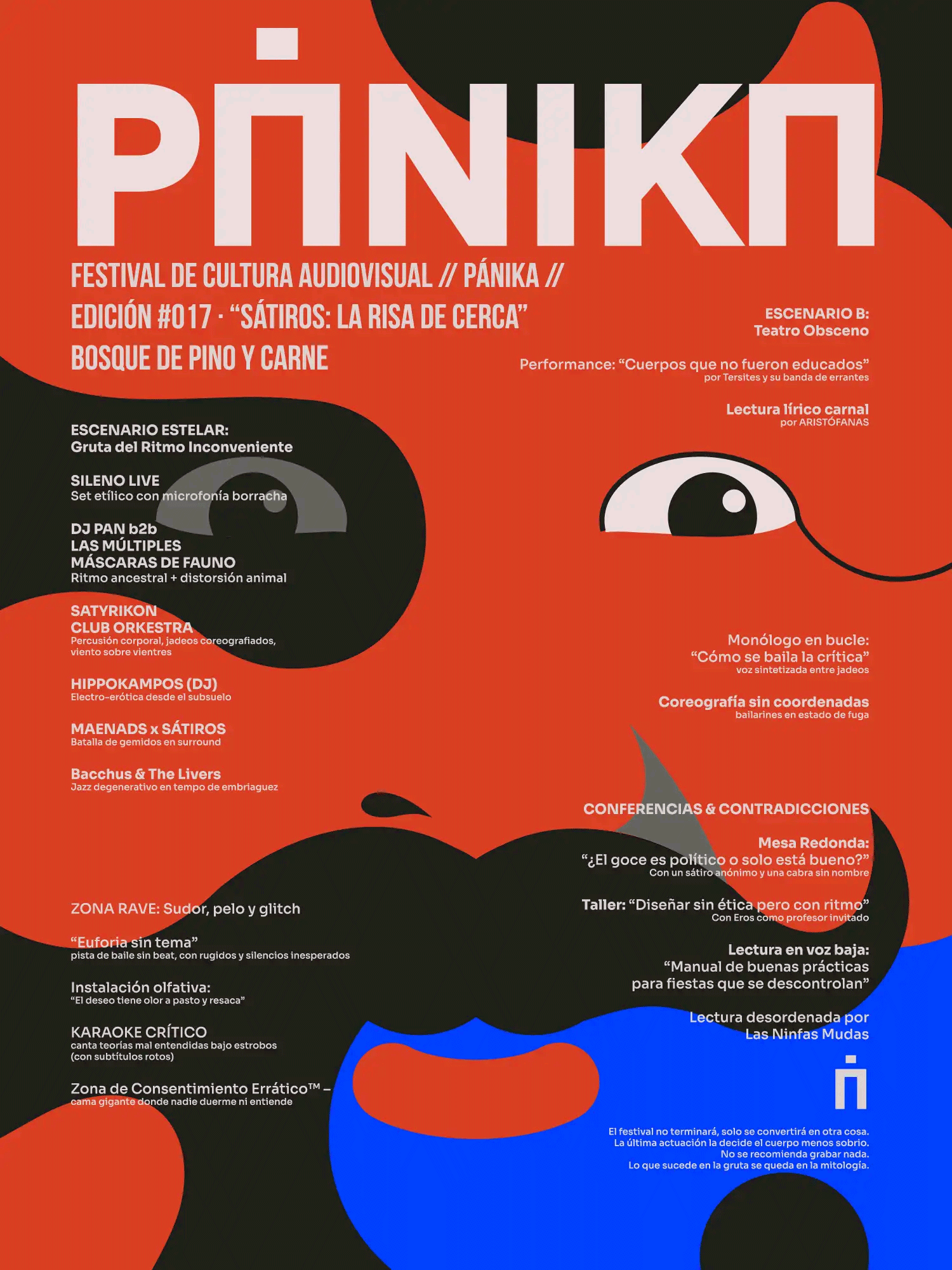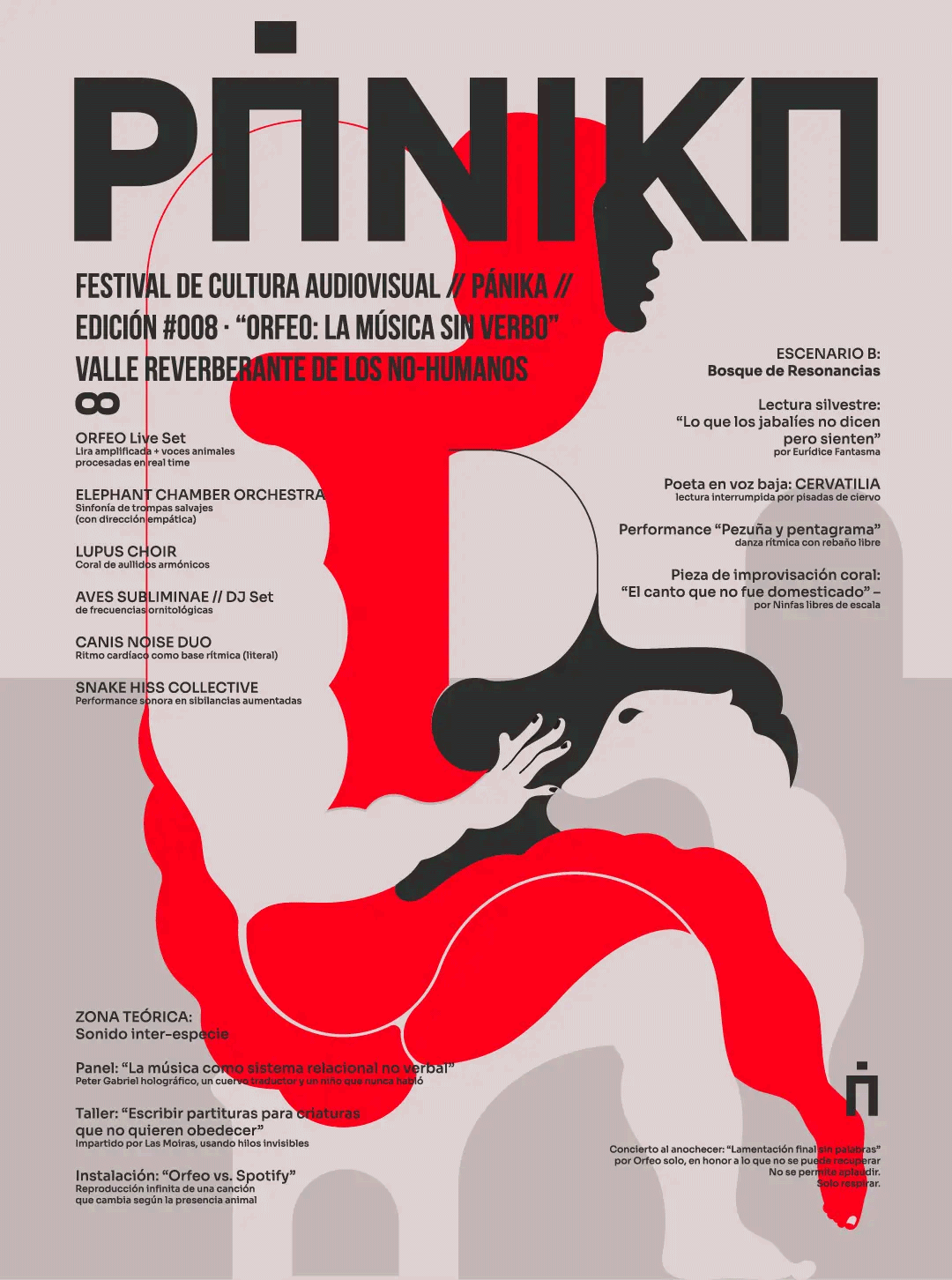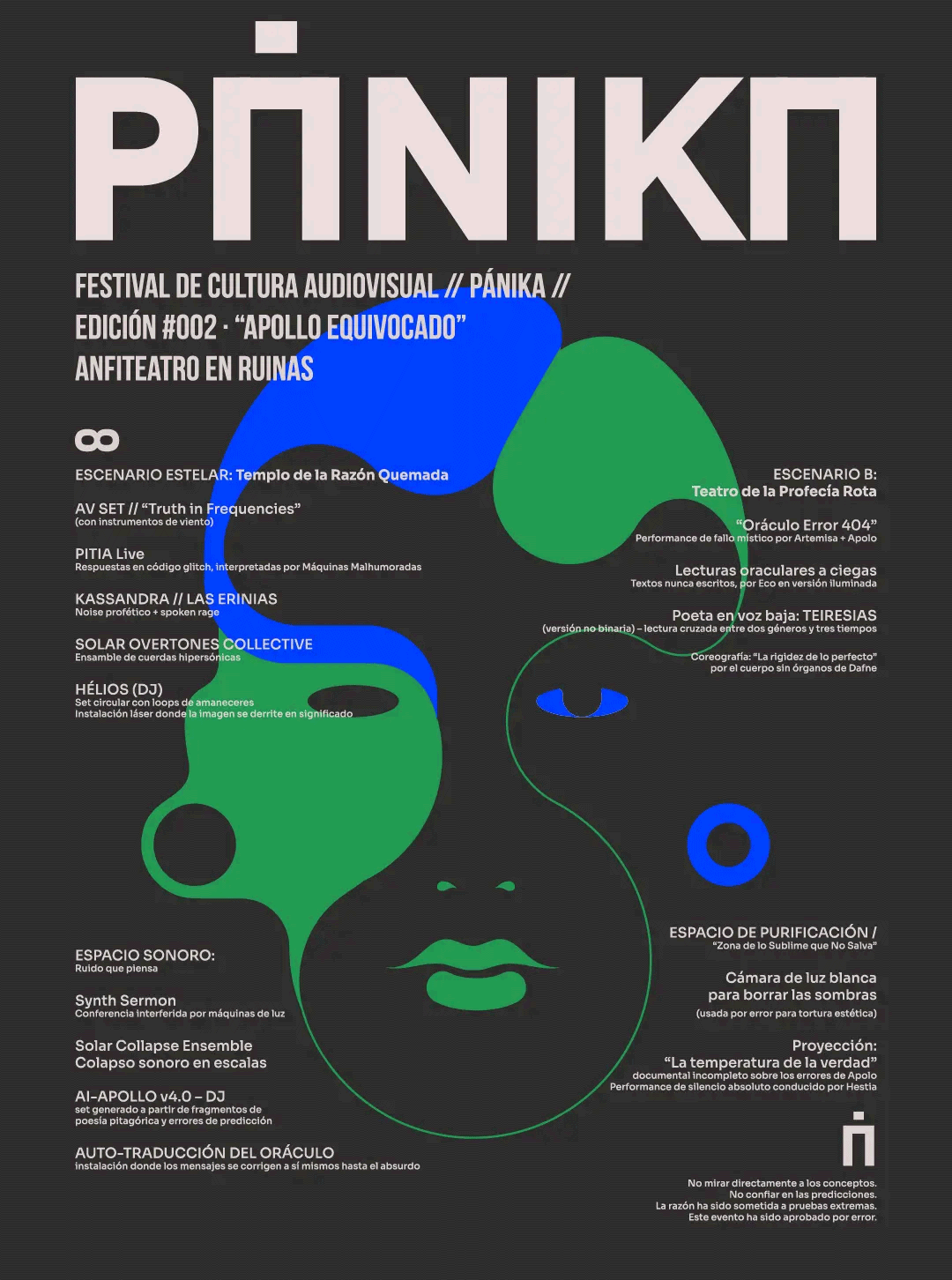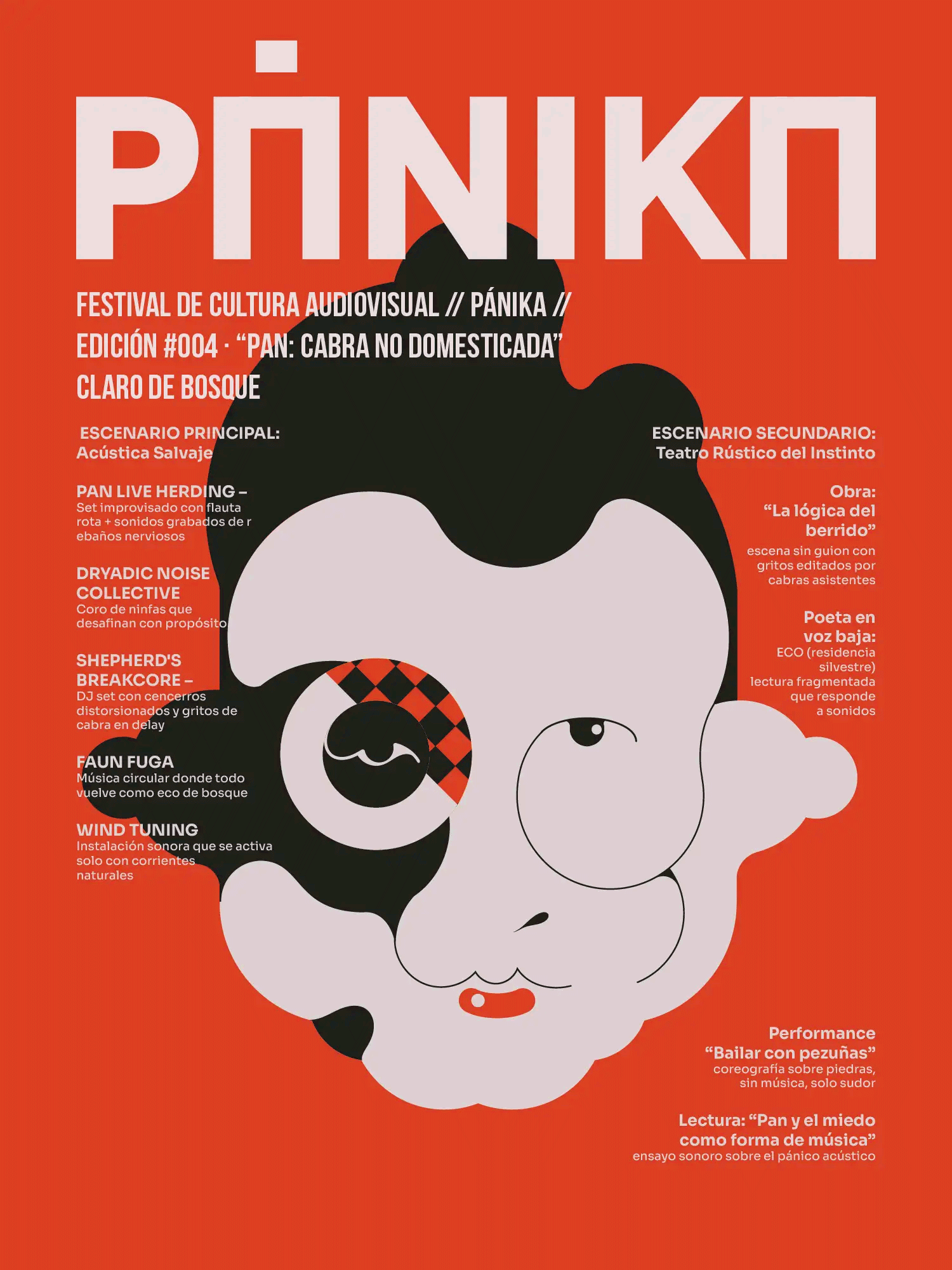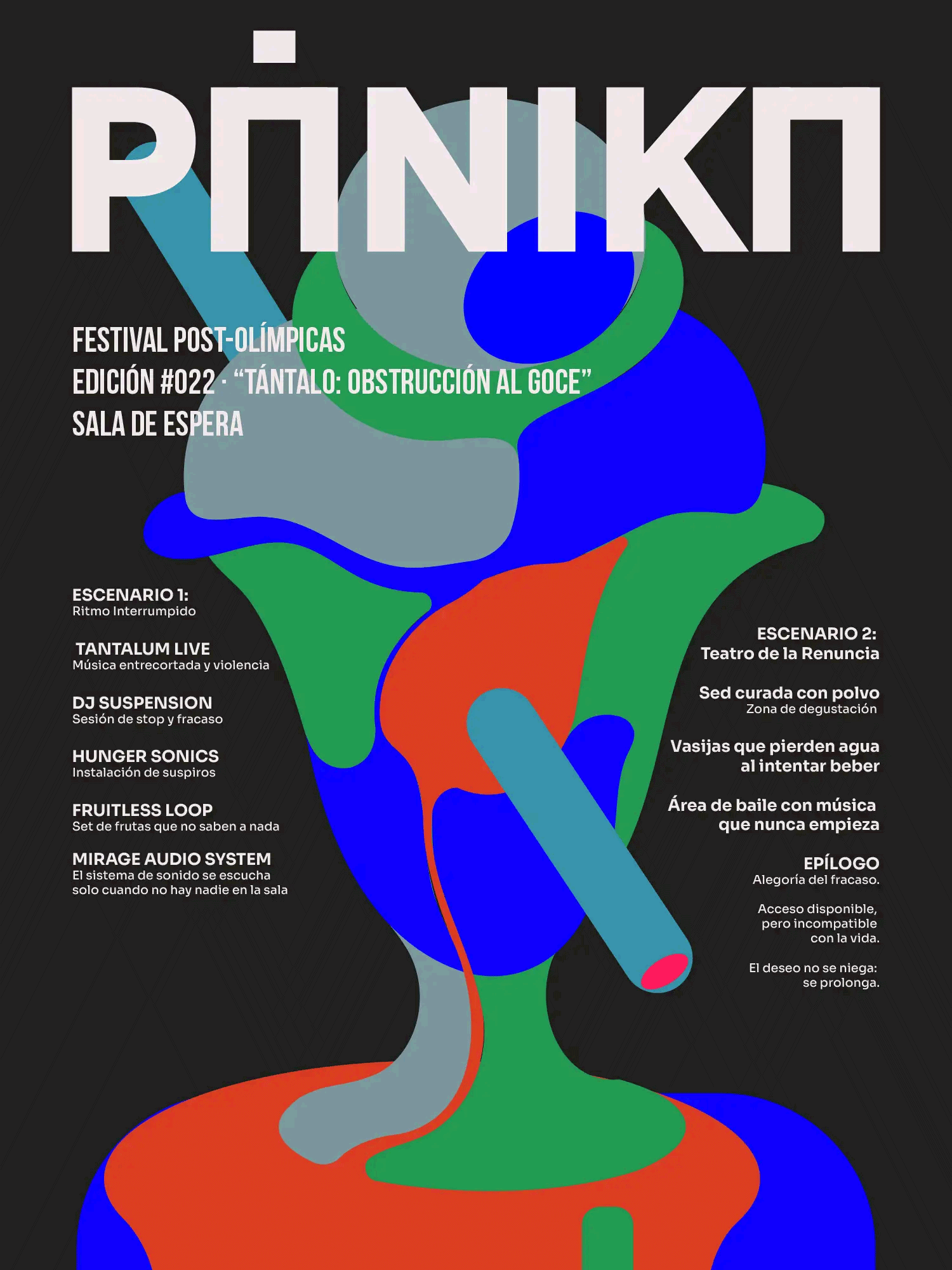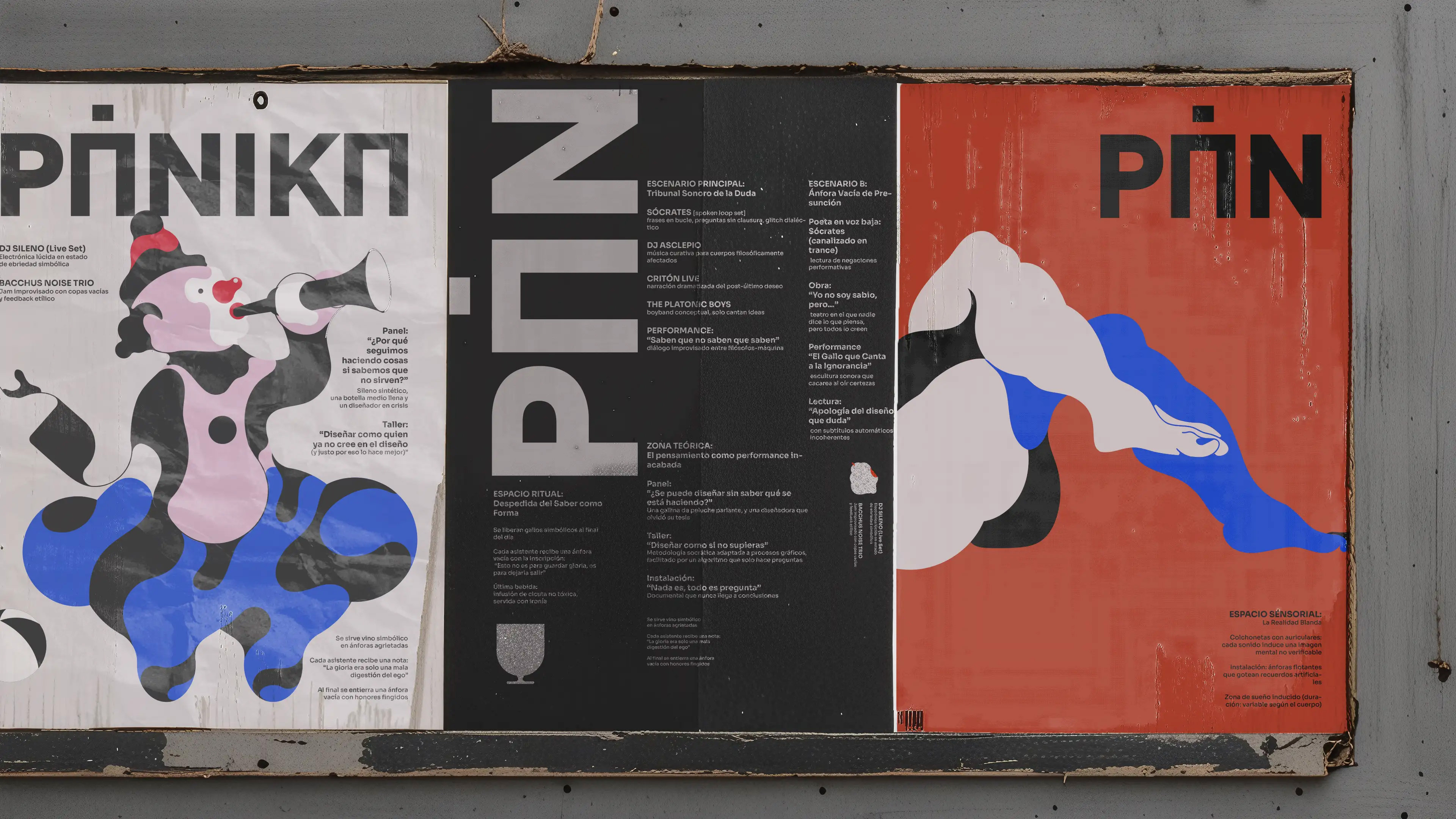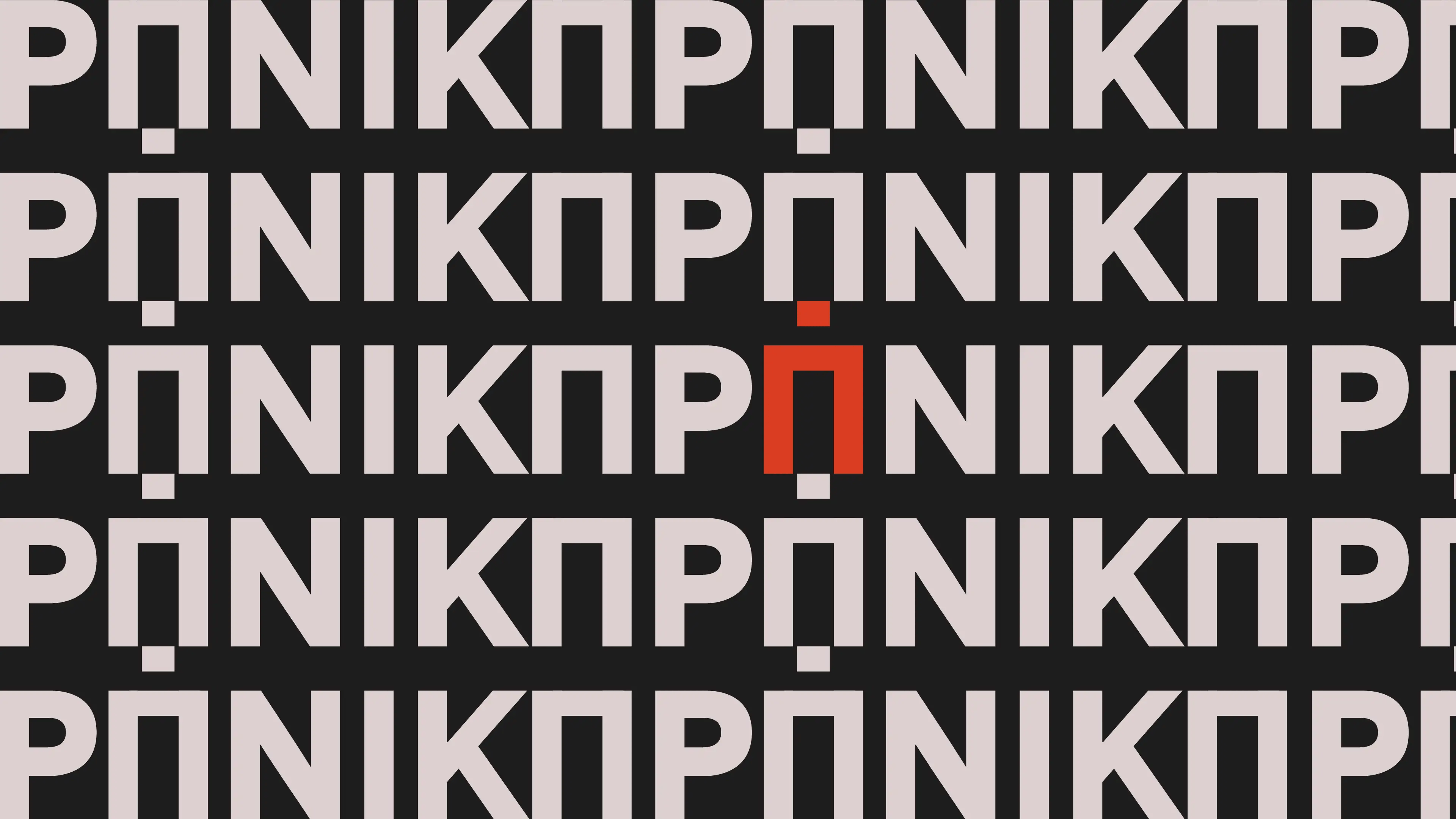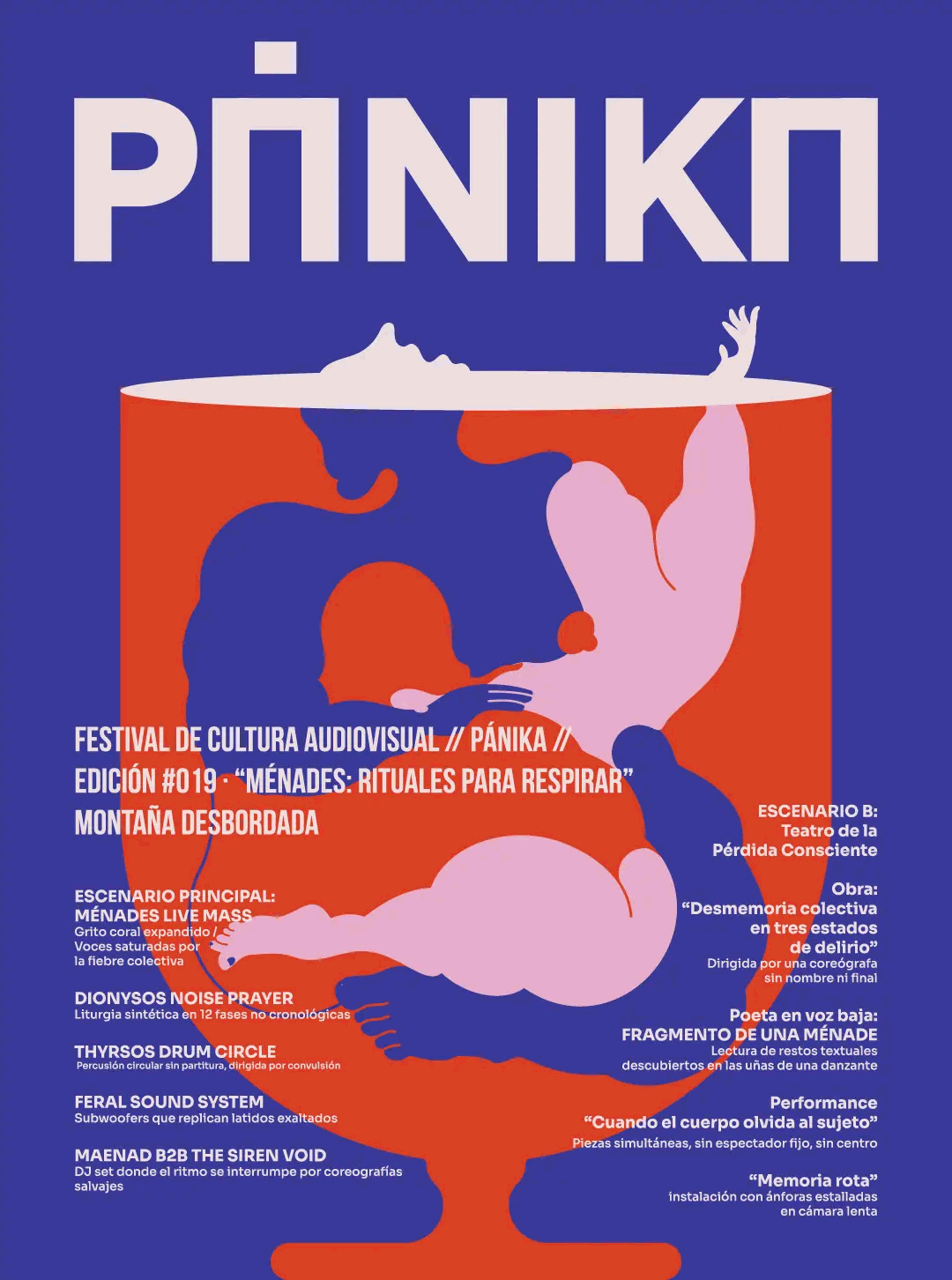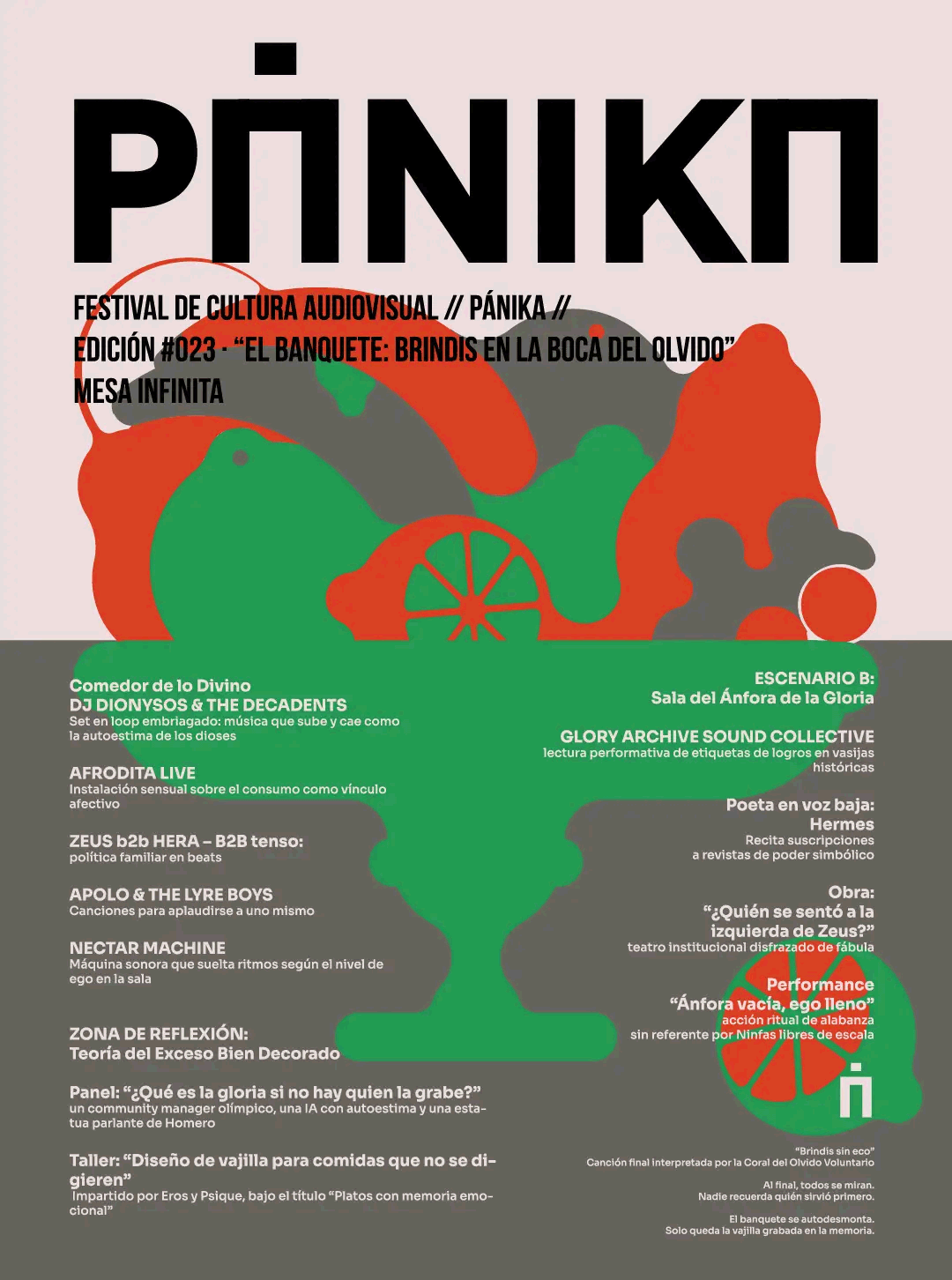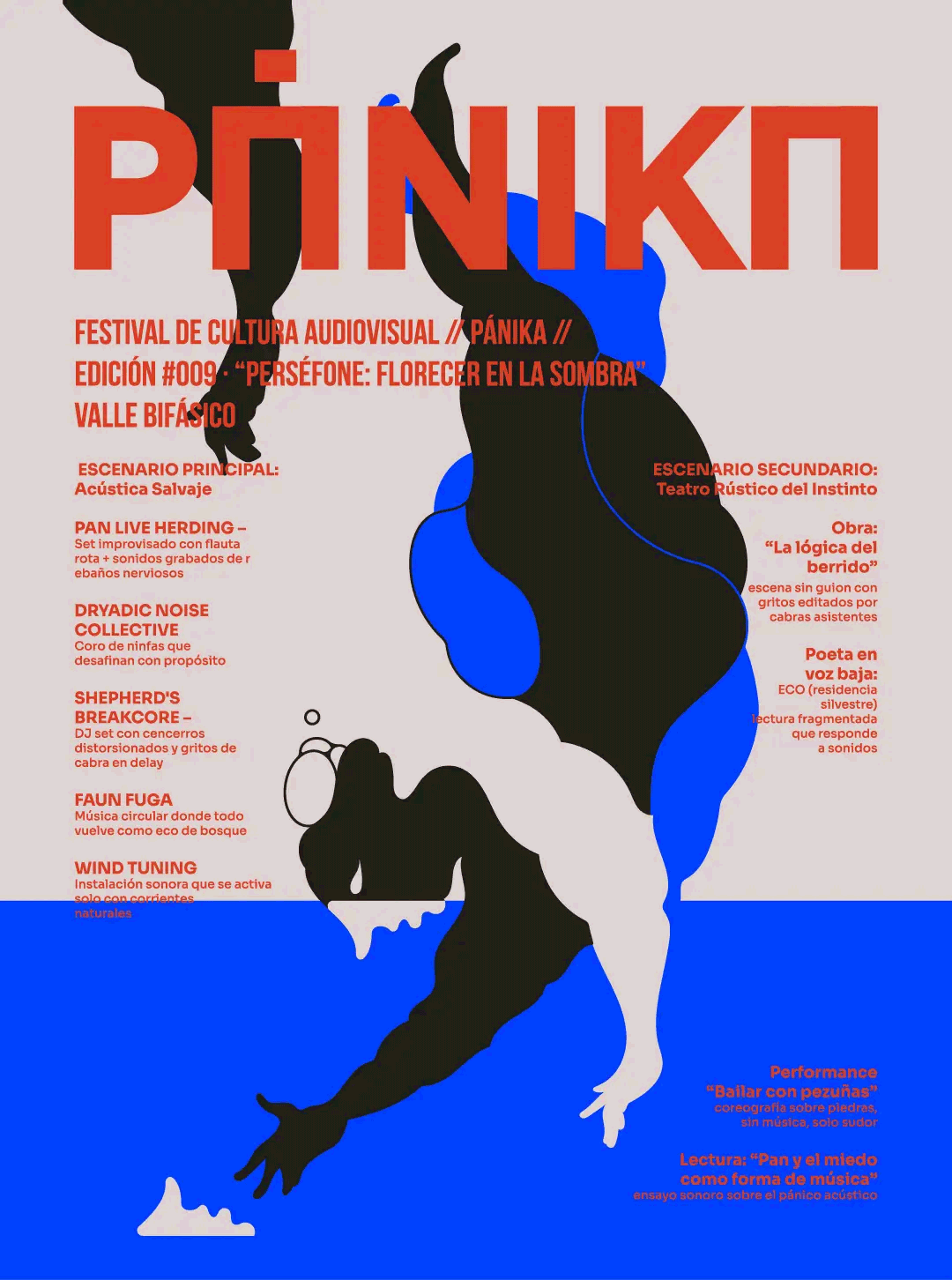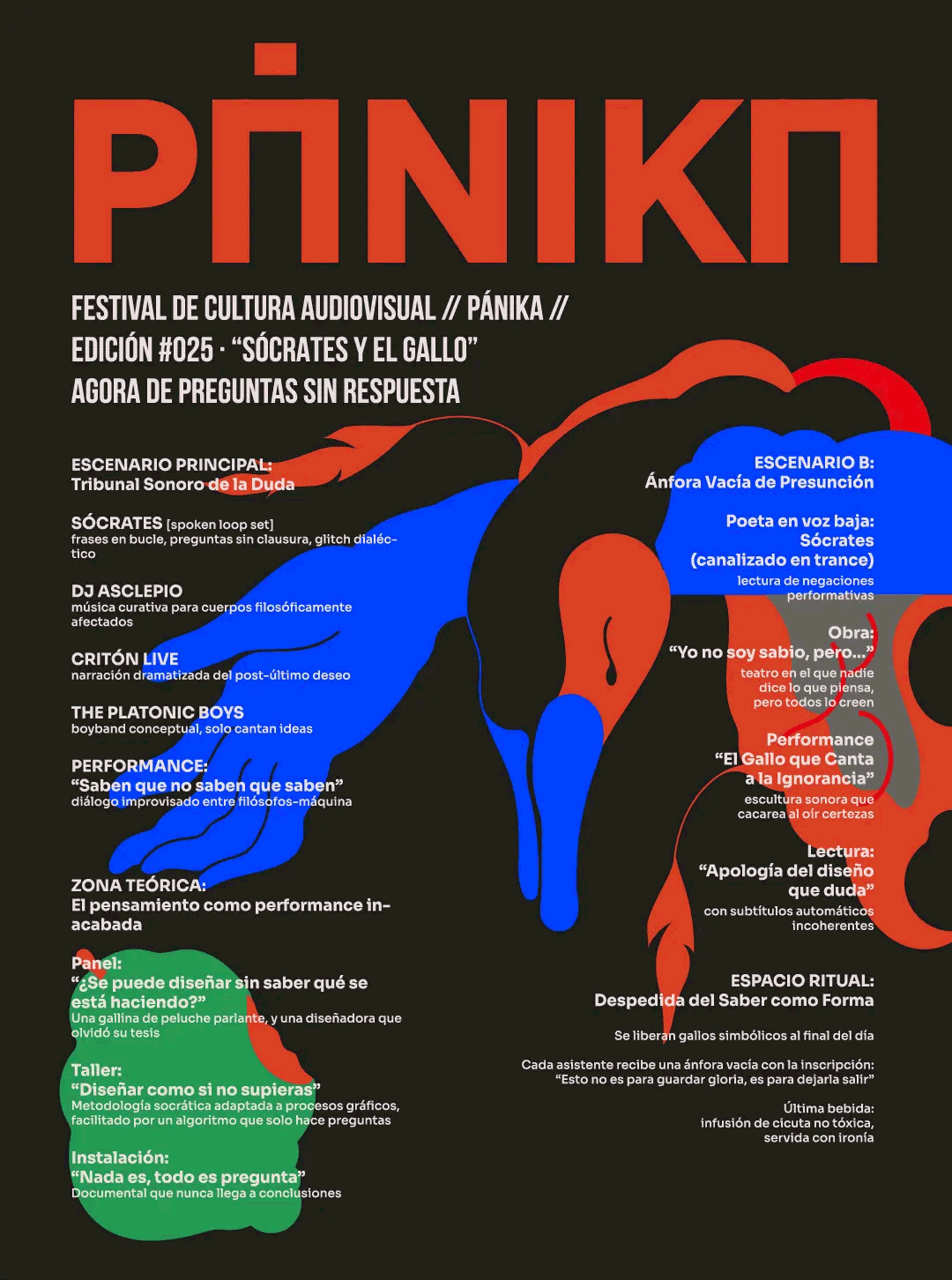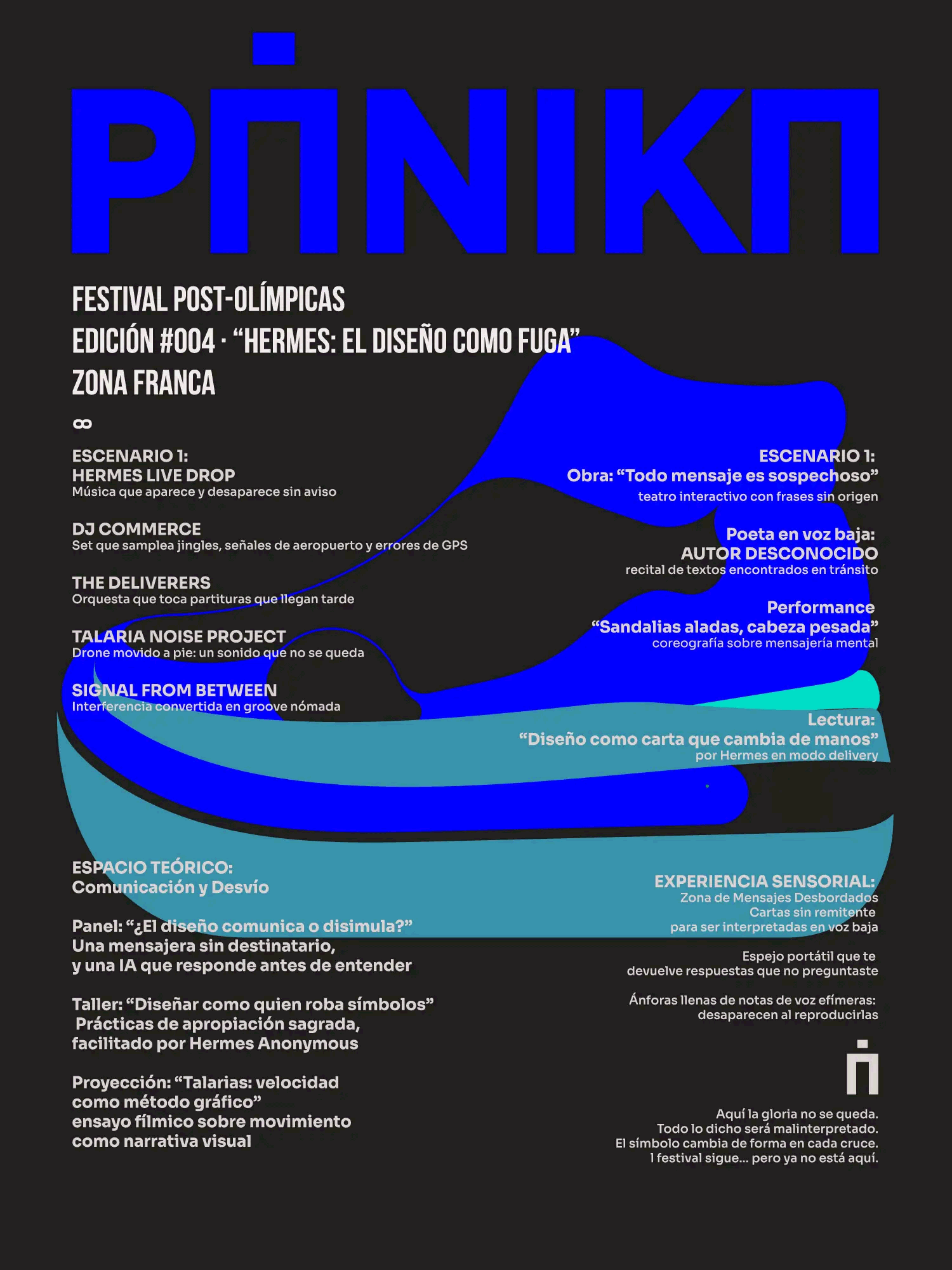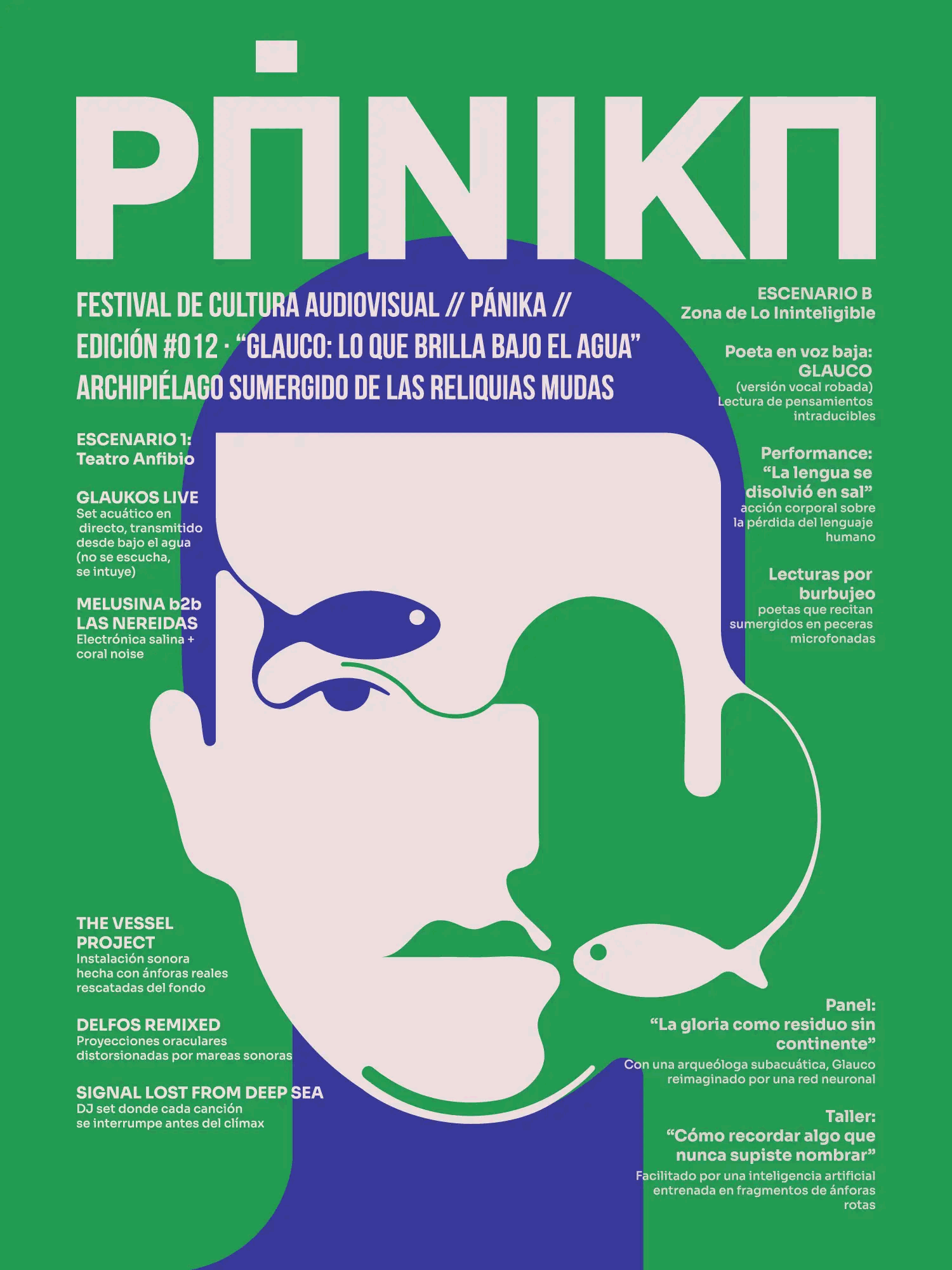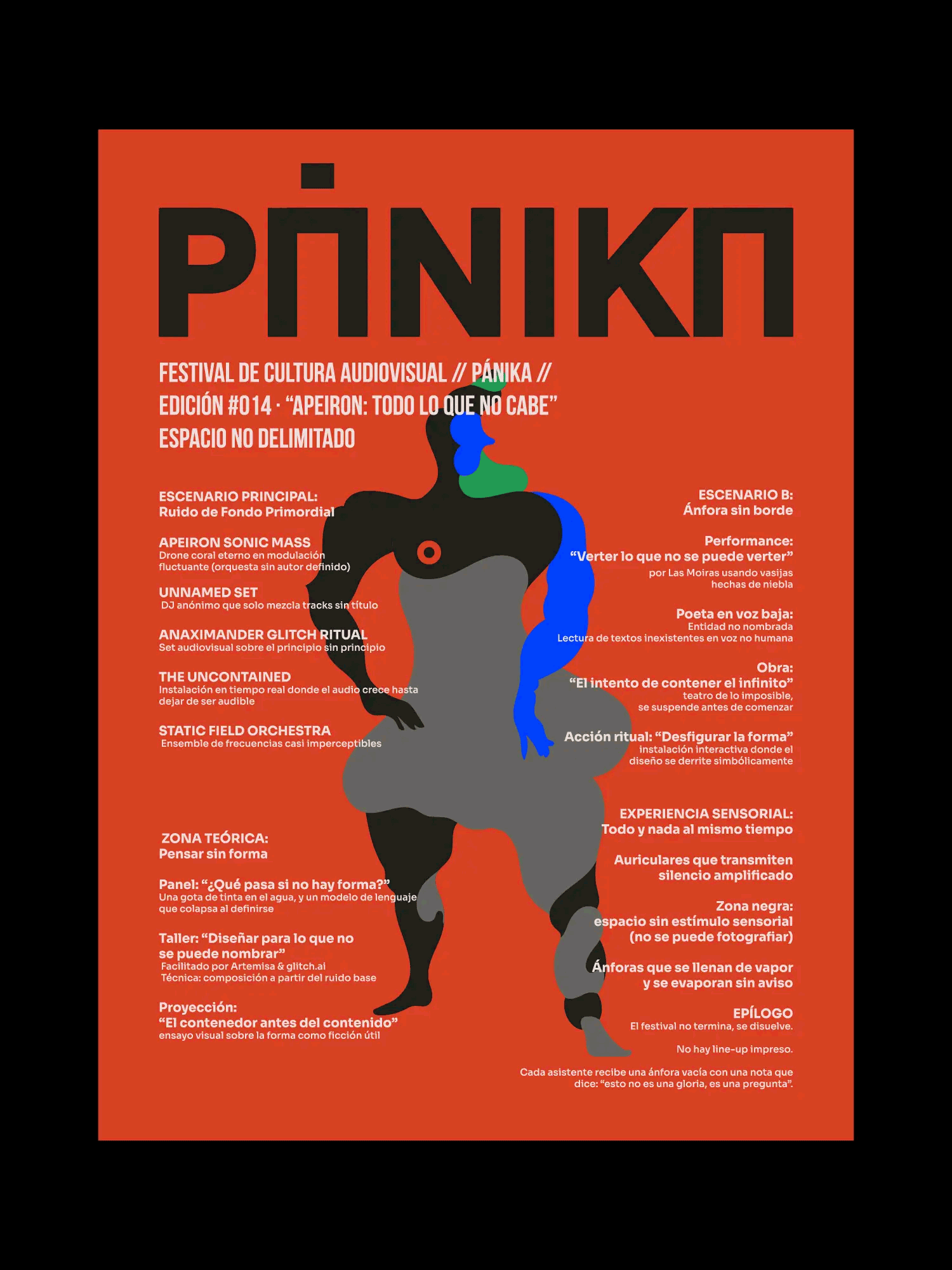
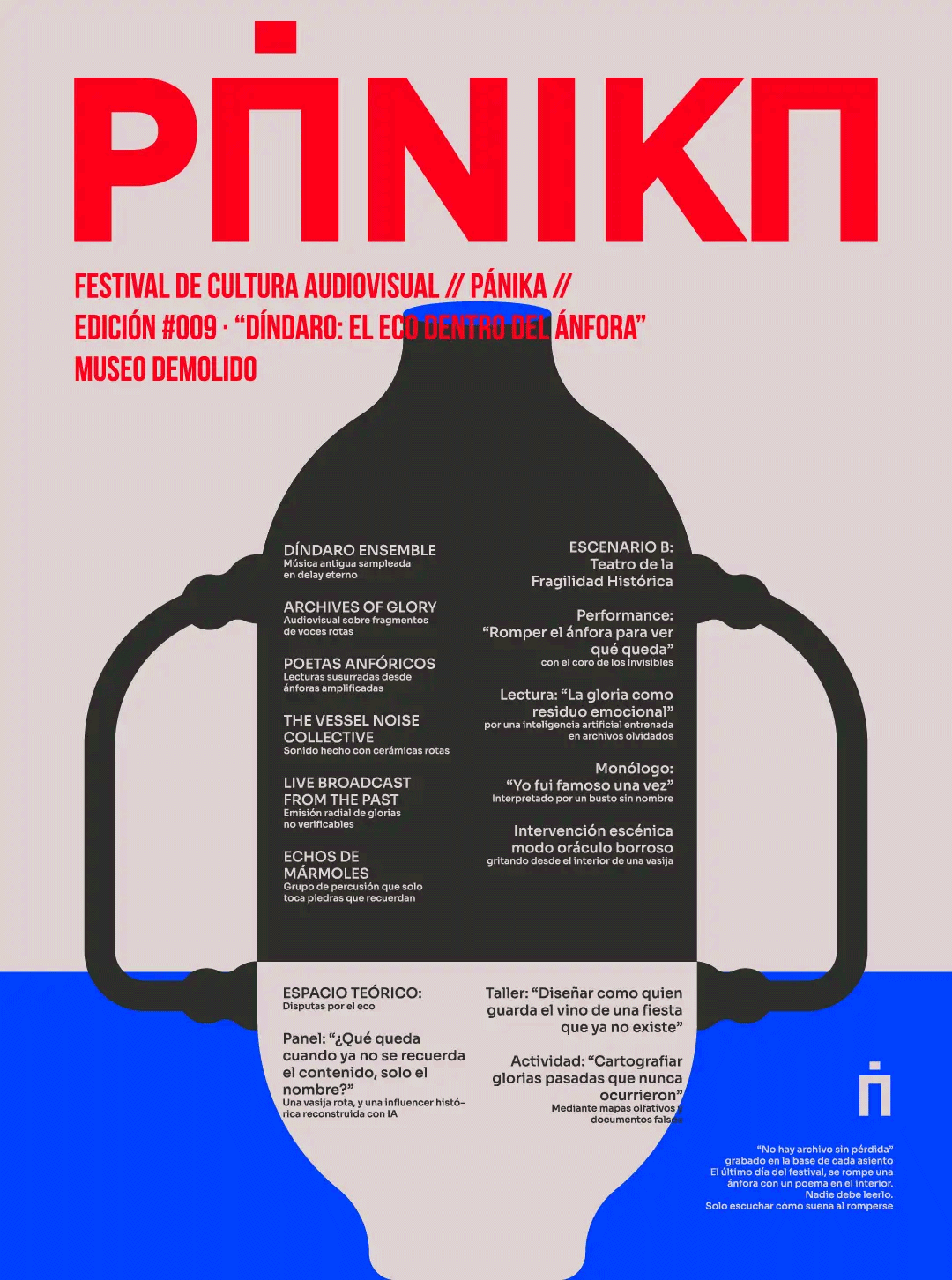
PÁNIKA is an imaginary—a myth.
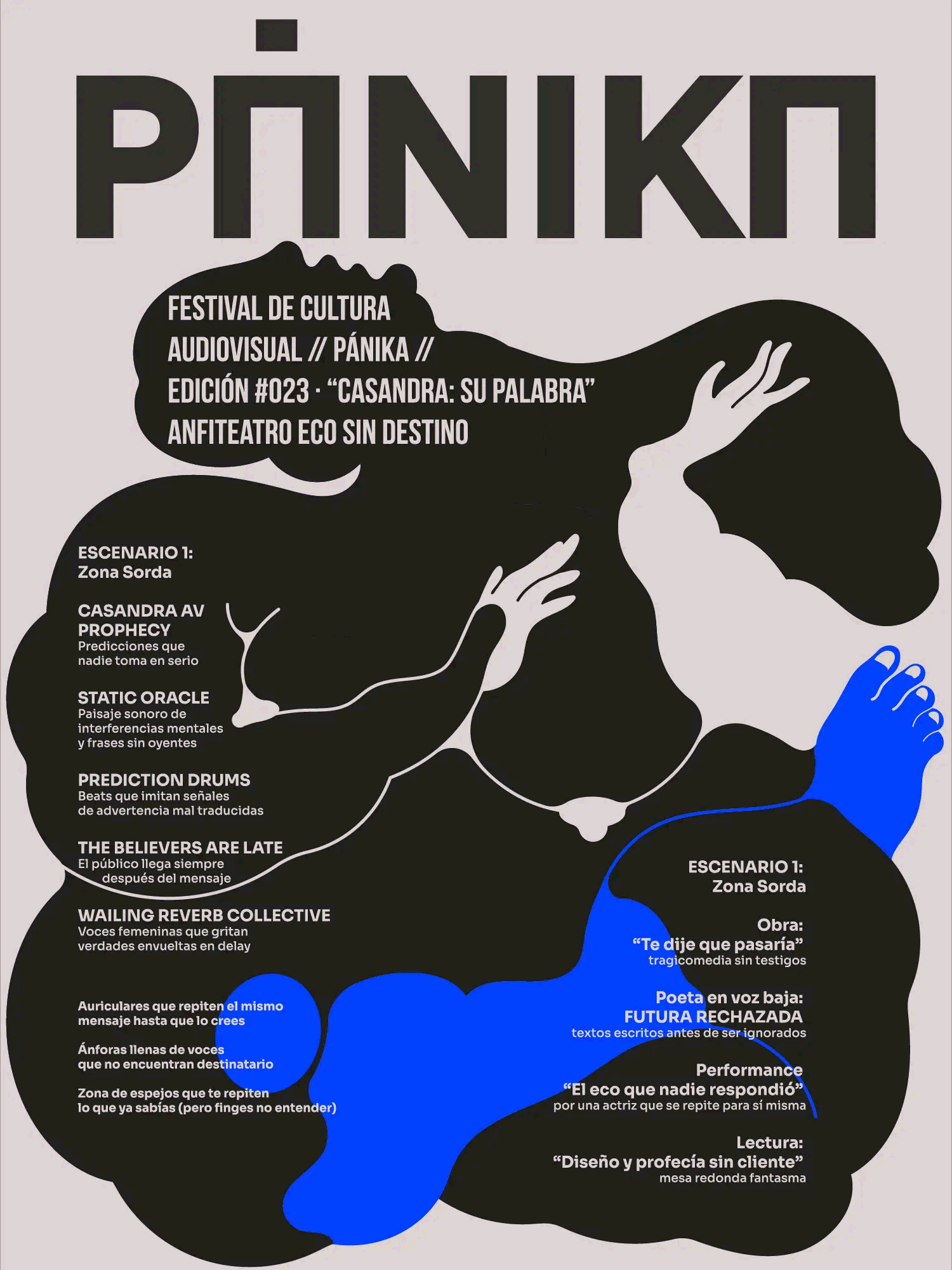
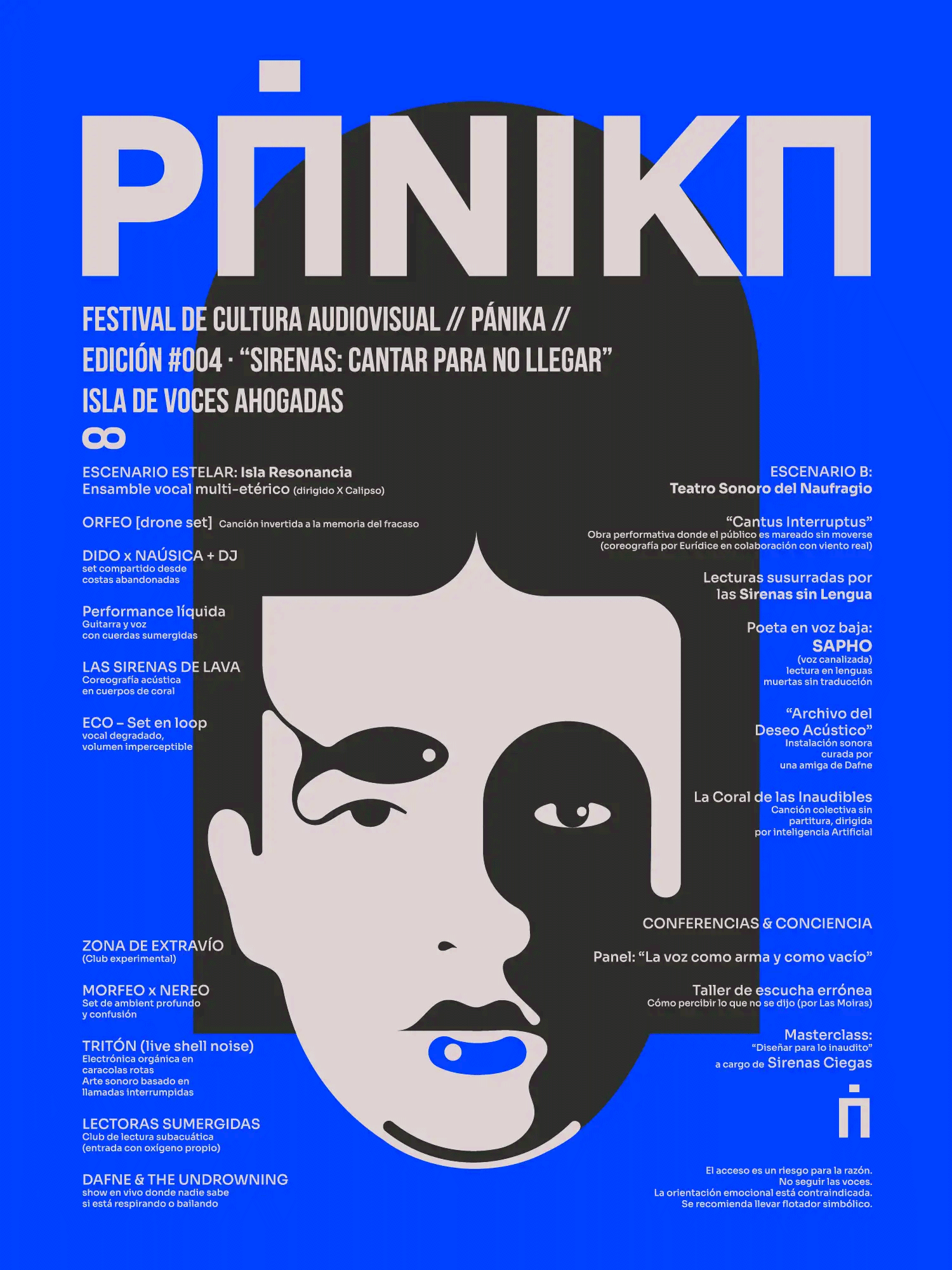
PÁNIKA, Festival of Audiovisual Culture, is pure speculation: a way of thinking through the concept of the poster.
The poster, today?
Once the aesthetic memory of the street, the poster as a genre is now reimagined as a piece that announces nothing—it remembers.
It was born on the street. It summoned, sold, and agitated. It served shops, parties, and wars. It made typography and color public.
Then came urban regulation, the screen, and the metric. Today, they’re barely visible: distribution is digital, cheap, and segmented. Audiences are categorized by who looks and for how long.
Once the aesthetic memory of the street, the poster as a genre is now reimagined as a piece that announces nothing—it remembers.
It was born on the street. It summoned, sold, and agitated. It served shops, parties, and wars. It made typography and color public.
Then came urban regulation, the screen, and the metric. Today, they’re barely visible: distribution is digital, cheap, and segmented. Audiences are categorized by who looks and for how long.
Imagining from myth
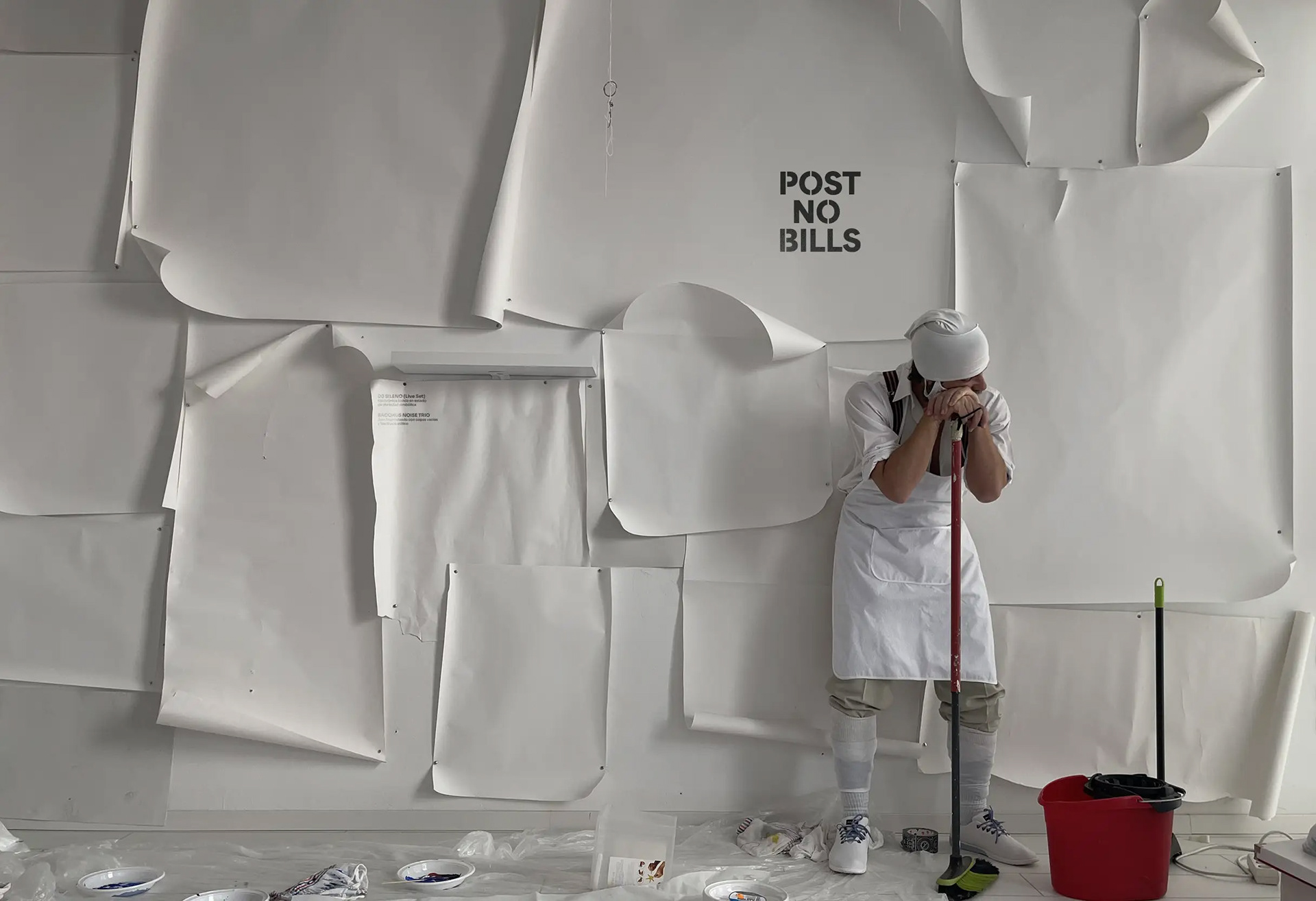
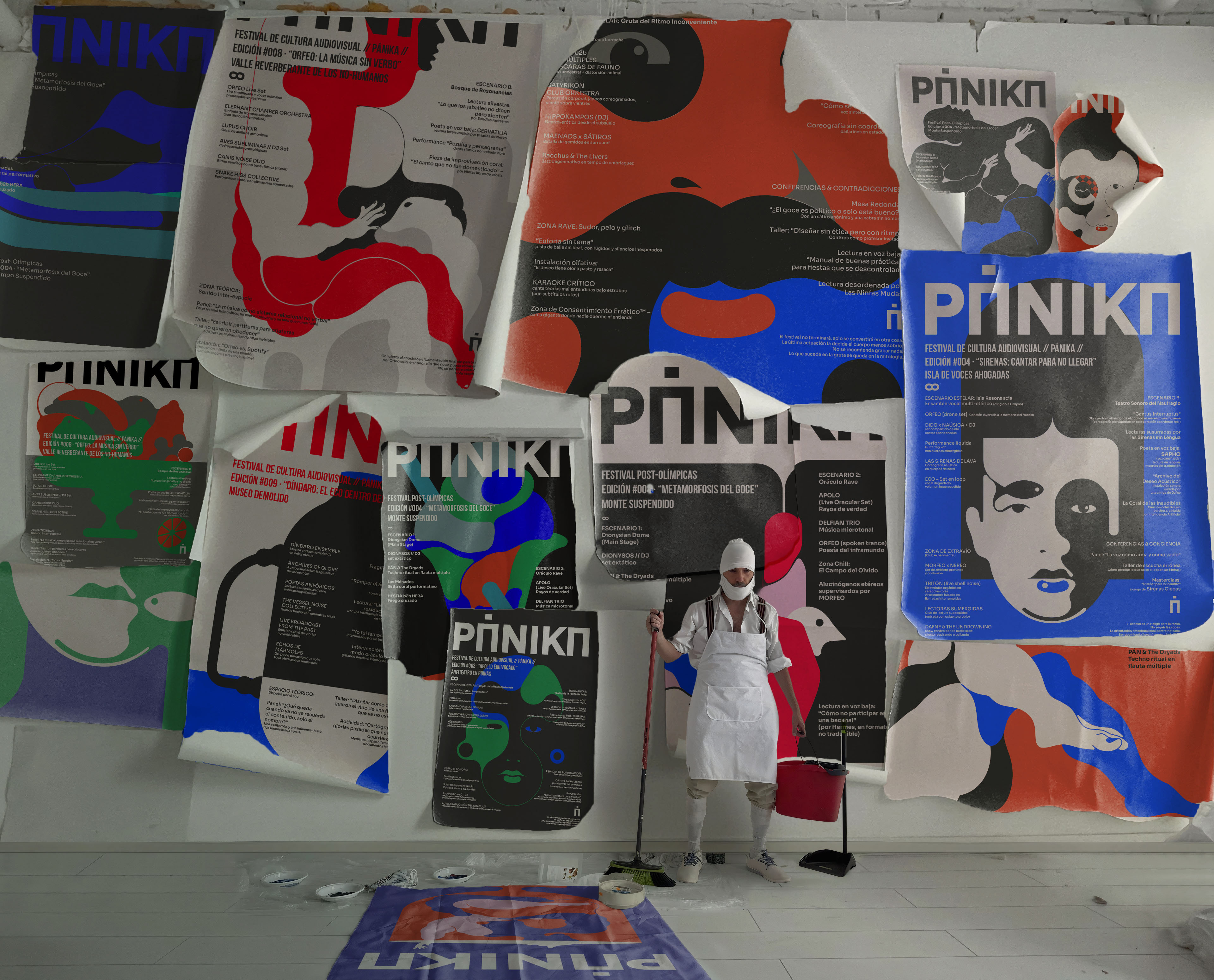
When a festival ends, only a few posters remain clinging to the walls.
The poster is a relic of the past—it remembers. It invites us to imagine what was never lived.
Images construct memory. Myths return as patterns of behavior and desire. They repeat, change masks, and reappear. That return nourishes a strange nostalgia—the nostalgia for an imagined event.
When a festival ends, only a few posters remain clinging to the walls.
The poster is a relic of the past—it remembers. It invites us to imagine what was never lived.
Images construct memory. Myths return as patterns of behavior and desire. They repeat, change masks, and reappear. That return nourishes a strange nostalgia—the nostalgia for an imagined event.
Warburg as method
The walls are arranged like a miniature Mnemosyne Atlas: fragments that, when brought together, form constellations. Images that return from other times. Anachronisms that collide. There is no linear reading—only montage. The poster ceases to be a promise of the future and becomes a moving archive of a past that persists.
The walls are arranged like a miniature Mnemosyne Atlas: fragments that, when brought together, form constellations. Images that return from other times. Anachronisms that collide. There is no linear reading—only montage. The poster ceases to be a promise of the future and becomes a moving archive of a past that persists.
Speculating with posters
Use the poster as a tool for thought. If the event cannot be reached, design does not lie—it embraces absence and works with it.
The graphic program—masks, color blocks, typographic hierarchies—produces questions rather than instructions.
The viewer composes their own version. That is the invitation.